
TLI (東寧音) is a sound-based writing system for Hokkien. Its name means “the sounds of Tanglieng,” with 音 pointing to its focus on pronunciation, tone, and tone sandhi, whilst echoing Hunminjeongeum (訓民正音), the original name of Hangul.
It is mainly used in mixed Hanri-Hangul writing, where Hanri (Hokkien written in Chinese characters) carries the character-based layer and Hangul clarifies sound. Pure Hangul writing is also possible when pronunciation needs to be shown directly.
How a syllable block works
TLI is written in blocks. One block is one syllable, and each block is built from two or three letters.
| Block | Letters | Sound |
|---|---|---|
| 김 | ㄱ + ㅣ + ㅁ | k + i + m → kim |
| 장 | ㅈ + ㅏ + ㅇ | j + a + ng → jang |
| 빻 | ㅃ + ㅏ + ㅎ | b + a + h → bah |
Read each block from the top left: first the initial consonant, then the vowel, then, if there is one, the final consonant underneath. The tables below go through these three positions in turn.
If you can read Korean, the blocks will look familiar, but the sounds are Hokkien: read them with the values given here, not the Korean ones.
The letters (jamo)
TLI has 41 letters (jamo): 19 initial consonants and 22 vowels. Eight of the consonants can also close a syllable as a final, and two of those, ㄹ and ㅎ, can combine as ㅀ. ㅉ and ᅟힻ are used only in foreign words.
Alphabetical order
ㄱ ㄲ ㄴ ㄷ ㄸ ㄹ ㅁ ㅂ ㅃ ㅅ ㅇ ㅈ ㅉ ㅊ ㅋ ㅌ ㅍ ㅎ ㆆ
ㅏ ᅟᅷ ㅐ ㅑ ᅟᆤ ㅓ ㅔ ㅕ ㅖ ㅗ ㅘ ㅙ ㅚ ㅛ ㅜ ㅞ ㅟ ㅠ ㅡ ᅟힻ ㅢ ㅣ
Finals: ㄱ ㄴ ㄷ ㄹ ㅀ ㅁ ㅂ ㅇ ㅎ
Romanisation
Main article: TLI romanisation
Lomari is the romanised form of TLI, representing the same pronunciation and tones as TLI Hangul.
| TLI (Hanri + Hangul) | Lomari | English |
| 讀冊 | thak-cheh | to study |
| 칟토 | chît-thó | to play |
| 羅馬字 | lo-mâ-rī | Romanisation (Lomari) |
Initial consonants
The audio pronounces the consonants along with the vowel “ㅏ (a)”.
| Hangul | Description | |
|---|---|---|
| 1 | ㄱ ⟨k⟩ |
Initial of 김죠 (金蕉 kīm-jiô, like ‘k’ in sky)¹ |
| 2 | ㄲ ⟨g⟩ |
Initial of 뀋뉴 (月娘 gueh-niú, like ‘g‘ in go, but weaker) |
| 3 | ㄴ ⟨n⟩ |
Initial of 나ᄋᅷ (嚨喉 na-áu, like ‘n‘ in no) |
| 4 | ㄷ ⟨t⟩ |
Initial of 대완 (台灣 tai-oán, like ‘t’ in stop) |
| 5 | ㄸ ⟨r⟩ |
Initial of 띧 (日 rît, like the ‘t’ in American English water) ² |
| 6 | ㄹ ⟨l⟩ |
Initial of 러빻 (滷肉 lôr-bah, like ‘l’ in lamp) |
| 7 | ㅁ ⟨m⟩ |
Initial of 마저 (媽祖 mâ-jòr, like ‘m’ in man) |
| 8 | ㅂ ⟨p⟩ |
Initial of 뱧 (壁 piah, like ‘p’ in spot) |
| 9 | ㅃ ⟨b⟩ |
Initial of 빡쥬 (目睭 bak-jiû, like ‘b’ in bat) |
| 10 | ㅅ ⟨s⟩ |
Initial of 살 (衫 sâ̰, like ‘s’ in see) |
| Audio source: Wikipedia | ||
| Hangul | Description | |
|---|---|---|
| 11 | ㅇ ∅ |
Null initial of 앙ᄃᅷ (紅豆 ang-tāu) |
| 12 | ㅈ ⟨j⟩ |
Initial of 장 (粽 jang, like ‘ts’ in cats) |
| 13 | ㅉ ⟨js⟩ |
Initial of 찜 (jsîm, the ‘g’ in gym) (used in loanwords) |
| 14 | ㅊ ⟨ch⟩ |
Initial of 추 (厝 chu, like ‘ch’ in cheap) (ㅈ but more breathy) |
| 15 | ㅋ ⟨kh⟩ |
Initial of 쿤 (睏 khun, like ‘k’ in kite) (ㄱ but more breathy) |
| 16 | ㅌ ⟨th⟩ |
Initial of 터ᄃᅷ (塗豆 thor-tāu, like ‘t’ in top) (ㄷ but more breathy) |
| 17 | ㅍ ⟨ph⟩ |
Initial of 풰 (被 phuē, like ‘p’ in pin) (ㅂ but more breathy) |
| 18 | ㅎ ⟨h⟩ |
Initial of 훼 (花 huê, like ‘h’ in hat) |
| 19 | ㆆ ⟨ng-⟩ |
Initial of ᅙᅥ향 (五香 ngôr-hiâng, like ‘ng’ in singer) |
| Audio source: Wikipedia; self-recording | ||
¹ Voiceless, unaspirated consonant
² ㄸ is pronounced /dz/ or /z/ in more conservative dialects.

Vowels
Basic vowels
| Hangul | Description | |
|---|---|---|
| 1 | ㅏ ⟨a⟩ |
Vowel of 앟 (鴨 ah, like ‘a’ in father) |
| 2 | ㅓ ⟨or⟩ |
Vowel of 허 (虎 hòr) like ‘aw’ in saw |
| 3 | ㅔ ⟨e⟩ |
Vowel of 뻬 (馬 bè) like ‘a’ in day |
| 4 | ㅗ ⟨o⟩ |
Vowel of 오 (蚵 ó, like ‘o’ in go) |
| Audio source: Wikipedia | ||
| Hangul | Description | |
|---|---|---|
| 5 | ㅜ ⟨u⟩ |
Vowel of 꾸 (牛 gú, like ‘oo’ in soon) |
| 6 | ㅡ ∅ |
Null vowel of 븡 (飯 pn̄g, like ‘∅’ in hmph) |
| 7 | ㅣ ⟨i⟩ |
Vowel of 시 (時 sí, like ‘ee’ in see) |
| Audio source: Wikipedia | ||
Compound vowels
| Hangul | Description | ||
|---|---|---|---|
| 1 | ᅟᅷ ⟨au⟩ |
Vowel of ᄀᅷ (狗 kàu, like ‘ow’ in cow) (Combination of ㅏ + ㅜ) |
|
| 2 | ㅐ ⟨ai⟩ |
Vowel of 채 (菜 chai, like ‘i’ in fight) (Combination of ㅏ + ㅣ) |
|
| 3 | ㅑ ⟨ya/ -ia⟩ |
Vowel of 챠 (車 chiâ, like ‘ya’ in yard) (Combination of ㅣ + ㅏ) |
|
| 4 | ᅟᆤ ⟨yau/ -iau⟩ |
Vowel of ᄂᆤ (貓 niâu, like ‘eow’ in meow) (Combination of ㅑ + ㅜ) |
|
| 5 | ㅕ ⟨yor/ -ior⟩ |
Vowel of 졍 (獎 jiòng, like ‘yo’ in York) (Combination of ㅣ + ㅓ) |
|
| 6 | ㅖ ⟨ye/ -ie⟩ |
Vowel of 뎬 (電 tiēn, like ‘ye’ in yes) (Combination of ㅣ + ㅔ) |
|
| + ㄱ + ㅇ |
Vowel of 곙 (景 kièng, like ‘io’ in million) |
||
| 7 | ㅘ ⟨oa⟩ |
Vowel of 좌 (蛇 joá, like ‘ua’ in guava) (Combination of ㅗ + ㅏ) |
|
| Audio source: Wikipedia; self-recording | |||
| Hangul | Description | |
|---|---|---|
| 8 | ㅙ ⟨oai⟩ |
Vowel of 괘 (怪 koai, like ‘whi’ in whine) (Combination of ㅗ + ㅐ) |
| 9 | ㅚ ⟨oe⟩ |
Vowel of 괴 (雞 koê, like ‘wa’ in wait) (Combination of ㅗ + ㅔ) |
| 10 | ㅛ ⟨yo/ -io⟩ |
Vowel of 쇼 (燒 siô, like ‘yo’ in yolk) (Combination of ㅣ + ㅗ) |
| 11 | ㅞ ⟨we/ -ue⟩ |
Vowel of 궤 (瓜 kuê, like ‘wa’ in wait) (Combination of ㅜ + ㅔ) |
| 12 | ㅟ ⟨wi/ -ui⟩ |
Vowel of 쥐 (水 jùi, like ‘wi’ in win) (Combination of ㅜ + ㅣ) |
| 13 | ㅠ ⟨yu/ -iu⟩ |
Vowel of 츄 (樹 chiū, as in ‘you‘) (Combination of ㅣ + ㅜ) |
| 14 | ᅟힻ ⟨er⟩ |
Vowel of ᄉힻ (sêr, the ‘i’ in sir) (used in loanwords) |
| 15 | ㅢ ⟨i⟩ |
Vowel of 희 (魚 hí, like ‘ee’ in see) (Pronounced like ㅣ) |
| Audio source: Wikipedia; self-recording | ||
Final consonants
The audio pronounces the consonants along with the vowel “ㅏ (a)”.
| Hangul | Description | |
|---|---|---|
| 1 | ㄱ ⟨-k⟩ |
Final of 걱 (國 kork, like ‘ck’ in sick) |
| 2 | ㄴ ⟨-n⟩ |
Final of 신 (新 sîn, like ‘n’ in sun) |
| 3 | ㄷ ⟨-t⟩ |
Final of 닫 (值 tât, like ‘t’ in cat) |
| 4 | ㄹ ⟨-˷⟩ |
Final of 귈 (關 kṵ̂i), indicates nasalised vowels³ |
| 5 | ㅀ ⟨-˷h⟩ |
Final of 햟 (挔 hia̰h) (Combination of finals ㄹ + ㅎ) |
| Hangul | Description | |
|---|---|---|
| 6 | ㅁ ⟨-m⟩ |
Final of 함 (蚶 hâm, like ‘m’ in hum) |
| 7 | ㅂ ⟨-p⟩ |
Final of 찹 (插 chap, like ‘p’ in stop) |
| 8 | ㅇ ⟨-ng⟩ |
Final of 성 (爽 sòng, like ‘ng’ in song)⁴ |
| 9 | ㅎ ⟨-h⟩ |
Final of 빻 (肉 bah, like the sound in uh-oh), indicates glottal stop |
³ ㄹ represents /l/ as an initial consonant but marks a nasal sound /◌̃/ in final position.
⁴ ㅇ is null in the initial position but represents the nasal sound /ŋ/ in the final position in place of ㆆ, which is only used as an initial consonant.
Tones
Hokkien is a tonal language, like Mandarin and Cantonese, where pitch distinguishes meaning. TLI represents Hokkien with five tones.
| Tone Name | Tone Mark | Remarks | |
| 1 | High stays high and level |
ˆ | 덩 (東) (≈ Pinyin’s 1st tone) |
| 2 | Falling starts high and drops |
ˋ | 덩 (黨) (≈ Pinyin’s 4th tone) |
| 3 | Low stays low, sinking slightly |
(unmarked) | 덩 (棟) (≈ Pinyin’s 3rd tone) |
| 4 | Rising dips, then climbs |
ˊ | 덩 (同) (≈ Pinyin’s 2nd tone) |
| 5 | Mid level, in the middle of your voice |
ˉ | 덩 (洞) (≈ pitch height in between Pinyin’s 1st & 3rd tone) |
Text can be written two ways, and one text sticks to one way throughout.
- With tone marks, as on this site: a syllable without a mark is Low tone, or neutral if it follows an apostrophe.
- Without tone marks, as in everyday typing: no syllable shows its tone, so an unmarked syllable tells you nothing about its tone.
릐ˋ 今仔日 食飽’쀄? with tone marks; 릐 긴아띧 쟣바'쀄? without.
Tone sandhi
Main article: Tone sandhi in Hokkien
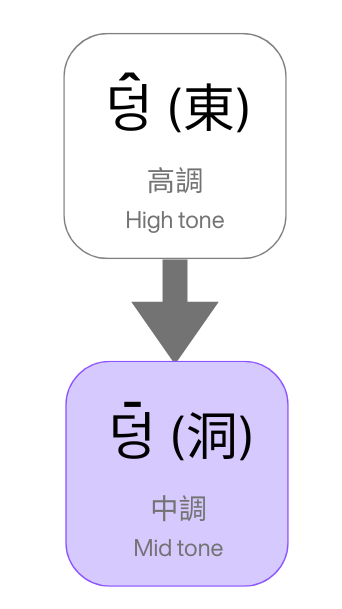
In Hokkien, non-final characters undergo tone change (sandhi), as shown in the example “東方” here:
덩 is in citation tone as it is the final character.
덩 undergoes tone sandhi as a non-final character (덩 → 덩); meaning remains unchanged.
Tone sandhi is important in Hokkien, but beginners need not memorise it before reading TLI, which writes tones in their changed forms where applicable.
Everyday phrases
| Hokkien | English |
| 릐 好 lì hò | Hello (lit. you good?) |
| 食飽’쀄? jiah-pà’bue? | Have you eaten? (a form of greeting) |
| 꽈 叫– goà kiò- | I am- (name) |
| 感謝 / 多謝 kâm-siā / tō-siā | Thank you |
| 歹勢 phâ̰i-se | Excuse me |
| 著 / 毋著 tiôh / m-tiôh | Correct/Incorrect |
Typing TLI
The easiest way: the TLI keyboard
The Hokkien IME on this site types TLI in your browser, with Hanri candidates, tone marks and Lomari, and nothing to install. On Android, the TLI keyboard does the same in any app; its download link is on the IME page.
Using the standard Korean keyboard
You can also type with the Korean keyboard built into your computer or phone. It has no keys for the tone marks, so text typed this way is written without tones, though the spacing rules still apply.
| Standard writing (with Hanri and tone marks) | 릐ˋ 今仔日 食飽’쀄? |
| Practical writing (without Hanri and tone marks) | 릐 긴아띧 쟣바'쀄? |
For Windows 11 users,
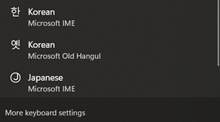
- Under Settings > Time & Language > Language & Region > Options, select “Add a language” and add Korean.
As the standard Korean keyboard does not support the input of ᅟᅷ au and ᅟᆤ yau, which are frequently used in Hokkien, the official shorthand prescribed here are ᅟᅡᆽ and ᅟᅣᆽ.
| Standard writing | 꽈ˋ 到’ᄅᆤˋ |
| Practical writing (shorthand applied) | 꽈 갖'럊 |
Using the Old Hangul keyboard
In order to type characters such as ᄀᅷ kau or ᅙᅡ nga, the Old Hangul keyboard is needed.
For Windows 11 users,
- After adding Korean, select ” ··· Language options”.
- Under “Installed keyboards”, select “Add a keyboard”.
- Select “Microsoft Old Hangul“.
Spelling guidelines
Main article: Spelling guidelines of TLI
Standard variety
Taipei Hokkien is the standard for tone sandhi in this orthography.
Other conventions draw on major Hokkien varieties and on the regional correspondences specified separately, with occasional principled exceptions arising from the orthography’s internal design.